12 Customer Service Tips That Actually Keep Online Shoppers Coming Back
Most customer service advice seems designed for large call centers with big teams and extensive training programs, not for small online businesses that need practical, easy-to-implement solutions. If you’re running a Shopify store, selling on Amazon or eBay, running an Etsy shop, or managing a small WooCommerce site, you don’t need theory you need things you can actually start doing this week.
So here are 12 tips that genuinely move the needle for small online sellers, without the corporate fluff.
1.Know your numbers, not just your gut feeling
Most store owners can tell you, roughly, whether customers seem happy. Far fewer can tell you their actual average response time, or what percentage of support conversations get resolved on the first reply.
You don’t need a complicated dashboard. Even tracking three numbers average response time, first-reply resolution rate, and customer satisfaction after a conversation tells you more about where you’re losing customers than any gut feeling will. If your response time is averaging six hours and you didn’t know that, that’s worth knowing.
2.Write down your support rules before you need them
If you’re the only one answering messages, you probably don’t think you need a written policy. But the moment you hire help, bring on a virtual assistant, or just get too busy to reply to everything yourself, undocumented rules turn into inconsistent answers.
A short internal guide when to offer a refund versus store credit, how to handle a damaged or late shipment, what counts as urgent enough to escalate saves enormous time later and keeps every reply consistent, no matter who’s typing it.
3.Know your own products better than your customers do
This sounds obvious, but it’s the most common gap in small online stores. A customer asking about fabric weight, battery life, or compatibility shouldn’t get a vague answer or a “let me check and get back to you” for something that’s basic product knowledge.
Keep a simple internal reference doc sizing details, materials, what’s included, common troubleshooting steps so whoever answers messages (including you, on a tired Tuesday) can answer quickly and accurately without digging through old emails.
4.Make “the customer is always right” less important than “the customer is always heard”
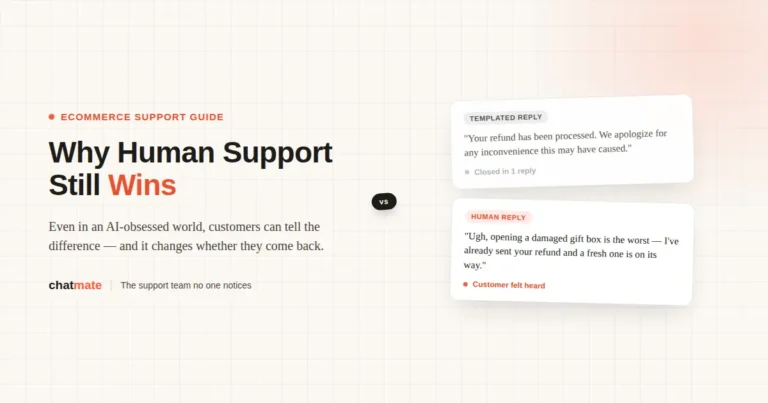
You won’t always be able to give an angry customer exactly what they want. But you can always make them feel like their frustration was actually heard, not just processed.
That distinction matters most during refund disputes or shipping complaints. Acknowledging the specific problem (“I can see your order was delayed by four days during a sale week that’s genuinely frustrating”) lands better than a generic apology template, even when the underlying solution is the same.
5.Be reachable where your customers already are
If you sell on Etsy, your buyers expect to message you through Etsy’s own conversation tool not be redirected to an external email. If you sell on Amazon or eBay, buyers expect replies through the platform’s buyer-seller messaging, partly because the platform is tracking your response time behind the scenes.
For Shopify or WooCommerce stores, that might mean live chat, email, and Instagram DMs all flowing into one place. The goal isn’t to be everywhere it’s to be wherever your specific customers already are, instead of asking them to come find you somewhere else.
6.Let simple questions answer themselves
Not every message needs a human typing a reply. A clear FAQ page, a detailed shipping and returns policy, or a few saved template answers for common questions (“where’s my order,” “do you ship internationally,” “what’s your return window”) can resolve a big chunk of inbound messages instantly any hour, any day.
This isn’t about replacing real support. It’s about freeing up your time (or your team’s time) for the messages that actually need a person thinking it through.
7.Speed matters more than people admit
Plenty of customers expect a reply within a few hours, and a meaningful share expect one within minutes especially on live chat, where waiting feels much longer than it actually is. A slow reply doesn’t just delay a sale; on marketplaces like Amazon and eBay, it can quietly affect your seller rating too.
You don’t need 24/7 staffing to fix this. You need a plan for the gap whether that’s a clear “we reply within X hours” expectation on your site, an autoresponder that actually sets expectations instead of just saying “we got your message,” or outsourced coverage for the hours you’re asleep.
8.Use automation to remove busywork, not warmth
Automation can be a huge time-saver when used the right way. Automatically sending tracking updates, identifying order-related inquiries, and directing messages to the right team member helps streamline support and keeps things running efficiently. The mistake is automating the part that should feel human: the actual conversation when someone’s upset or confused.
A good rule of thumb: automate the repetitive lookup work behind the scenes, and keep the actual reply sounding like a person who read the message, not a templated bot reacting to a keyword.
9.Remember details so the customer doesn’t have to repeat them
Few things annoy customers more than explaining their problem, only to have to explain it again to someone else, or in a follow-up message. If you’re using a shared inbox or help desk, make sure whoever replies can see the full conversation history and order details before typing anything.
This single habit not making people repeat themselves does more for perceived support quality than almost any other change you can make.
10.Ask for feedback, and actually read it
A short one-question survey after a resolved support conversation (“How would you rate this experience?”) takes customers seconds to answer and gives you an honest read on how support is actually going, separate from your sales numbers.
When someone gives you a low score, that’s more valuable than ten high scores — it tells you exactly where something broke. Don’t just collect this data. Actually look at the pattern in the low scores every month or so.
11.Avoid flat “no” answers when there’s any other option
“No” shuts a conversation down. “Here’s what I can do instead” keeps it moving. If a return window has technically passed, or a discount code doesn’t apply to a specific item, look for the closest reasonable alternative before defaulting to a flat refusal store credit, a partial discount, an exception for a clearly genuine case.
This doesn’t mean giving away free things to every complaint. It means a customer should rarely walk away from a conversation feeling like a door was slammed, even when the literal answer is no.
12.Treat support replies as a small, repeated brand impression
Every reply a customer gets is a tiny extension of your brand maybe the only direct, personal interaction they’ll ever have with your business. A reply that sounds rushed, copy-pasted, or oddly formal compared to your store’s actual personality creates a strange gap between how your brand looks and how it actually behaves.
This matters even more if support is being handled by someone other than you — a hire, a virtual assistant, or an outsourced team. If the tone shifts noticeably, customers notice, even if their question still gets answered.
The Bottom Line
None of this requires a massive team or an expensive platform. It requires deciding, deliberately, how your store talks to people when something doesn’t go perfectly — and then doing that consistently, whether it’s you answering at midnight or someone else answering on your behalf.
For small online sellers, this is genuinely one of the few areas where you can outperform much bigger competitors. They have more resources. You can have faster replies, more personal answers, and customers who actually feel heard — and that’s often the bigger deciding factor in whether someone buys from you again.